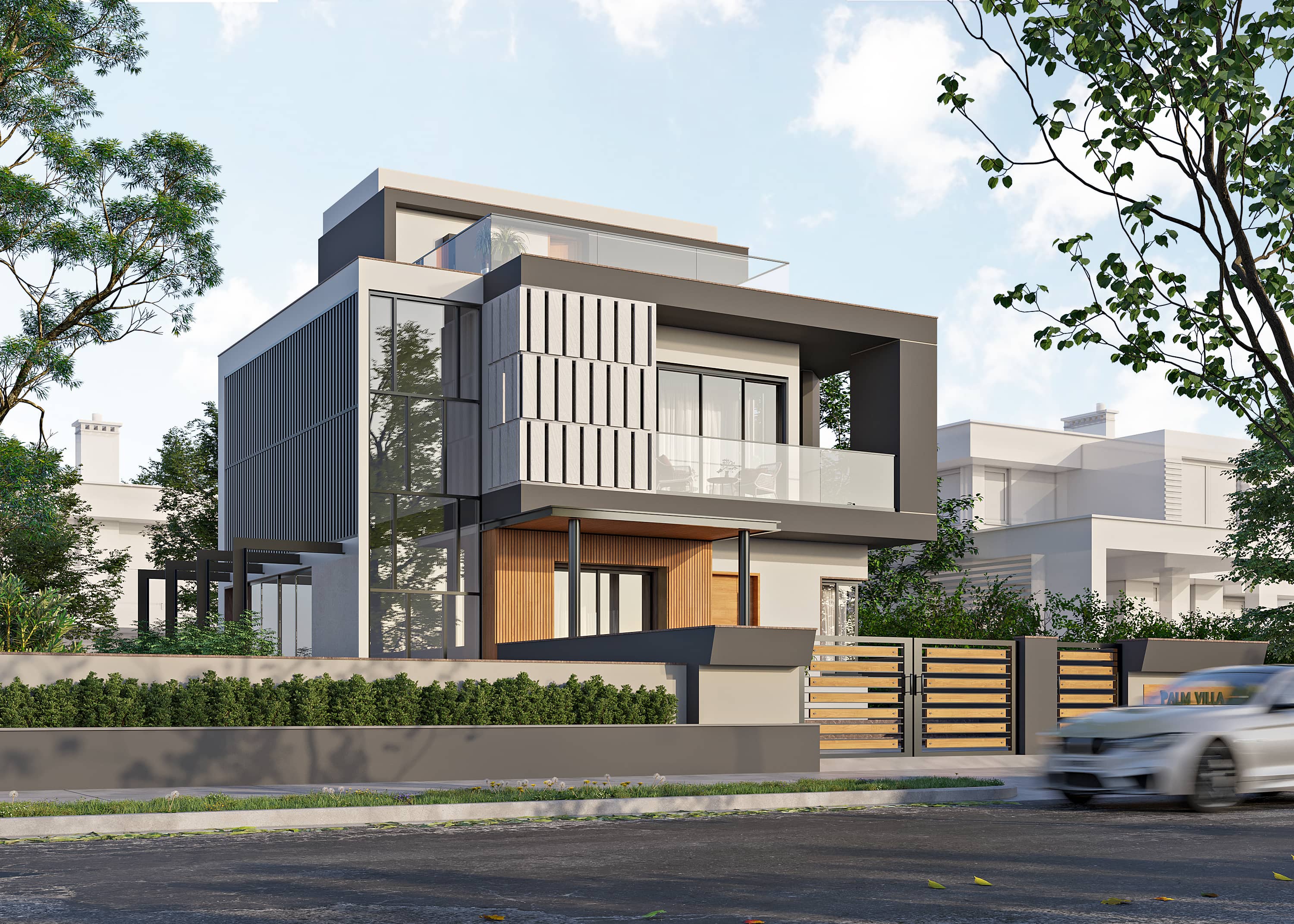
Introduction: The Real Estate Marketing Revolution
The real estate industry is experiencing a fundamental transformation in how properties are marketed, sold, and experienced by potential buyers. Traditional marketing methods—static floor plans, artist sketches, and empty show homes—are rapidly being replaced by sophisticated 3D visualization technologies that allow buyers to experience properties in unprecedented detail before a single brick is laid.
This shift represents more than just a technological upgrade; it's a complete reimagining of the buyer journey and the sales process. Modern property developers, builders, and architects who embrace 3D architectural visualization are seeing remarkable results: faster sales cycles, higher conversion rates, reduced marketing costs, and the ability to secure pre-construction commitments that were previously impossible to achieve.
The global real estate visualization market, valued at over $2.5 billion and growing at 20% annually, reflects the industry's recognition that visualization technology is no longer optional—it's essential for competitive success. From luxury residential developments to commercial projects, 3D rendering has become the cornerstone of effective real estate marketing strategies.
What makes 3D visualization so powerful is its ability to bridge the gap between imagination and reality. Potential buyers no longer need to interpret technical drawings or imagine how an empty space might look when furnished. Instead, they can virtually walk through photorealistic representations of their future homes, experience different design options, and make confident purchasing decisions based on clear, compelling visual information.
This comprehensive guide explores how 3D visualization is transforming every aspect of real estate marketing, from initial concept presentations to final sales conversions. We'll examine the specific benefits that developers are experiencing, the technologies driving this revolution, and the strategies that leading real estate firms use to maximize their return on visualization investments.
Whether you're a property developer looking to improve sales performance, an architect seeking to better communicate design concepts, or a marketing professional tasked with attracting buyers to pre-construction properties, understanding the strategic application of 3D visualization technology will provide competitive advantages that directly impact your bottom line.
The Evolution of Real Estate Marketing: From Blueprints to Virtual Reality
Traditional Real Estate Marketing Challenges
For decades, real estate marketing faced fundamental challenges that frustrated buyers and limited sales effectiveness. Property developers relied on technical floor plans, basic renderings, and physical show homes—each method presenting significant limitations that impacted buyer confidence and sales velocity.
The Blueprint Problem Technical architectural drawings, while essential for construction, create massive communication barriers with buyers. Most people cannot accurately visualize three-dimensional spaces from two-dimensional floor plans. This visualization gap leads to uncertainty, delayed decisions, and missed sales opportunities as potential buyers struggle to understand spatial relationships, room sizes, and overall flow.
Studies consistently show that over 70% of homebuyers have difficulty interpreting traditional floor plans and translating them into realistic expectations of livable space. This comprehension gap frequently results in buyer's remorse, construction change requests, and dissatisfaction when completed properties don't match mental images formed from inadequate marketing materials.
Physical Model Limitations Scale models and show homes, while more tangible than blueprints, present their own challenges. Physical models are expensive to produce, difficult to modify, and limited in their ability to convey the true experience of full-scale spaces. Show homes require significant capital investment, can only showcase one design variation, and may not be ready until well into the construction process when optimal sales timing has passed.
The cost of constructing a single show home can exceed $100,000 when including furnishing, staging, and maintenance. Yet these substantial investments showcase only one configuration, leaving buyers to imagine alternative layouts, finishes, and customization options that could better suit their needs.
The Emotional Disconnect Perhaps most significantly, traditional marketing methods fail to create the emotional connection that drives purchasing decisions. Static images and technical drawings don't allow buyers to imagine themselves living in the space, hosting gatherings in the kitchen, or relaxing in the master suite. This emotional gap directly impacts conversion rates and sales velocity.
Behavioral psychology research confirms that emotional engagement is critical in high-value purchase decisions. When buyers can't emotionally connect with a property, they default to analytical comparisons of square footage and price per square foot—commoditizing the decision and reducing the perceived value of unique design features and quality construction.
The Digital Transformation of Property Marketing
The introduction of 3D visualization technology addresses every limitation of traditional marketing methods while creating entirely new capabilities that were previously impossible. This transformation isn't merely about better images—it's about fundamentally changing how properties are conceptualized, presented, and experienced throughout the entire sales process.
Photorealistic Rendering Revolution Modern 3D rendering technology produces images that are virtually indistinguishable from professional photography of completed properties. Advanced rendering engines simulate natural light behavior, material properties, and atmospheric effects with stunning accuracy, creating visualizations that look and feel completely real.
These photorealistic renders allow developers to showcase properties in perfect condition with ideal lighting, styling, and environmental conditions—advantages that even completed show homes struggle to achieve. Every detail from fabric textures to wood grain patterns can be accurately represented, giving buyers complete confidence in what they're purchasing.
The technical capabilities of current rendering software are remarkable. Ray-traced lighting accurately simulates how sunlight will enter windows at different times of day. Physically-based rendering materials reflect and refract light exactly as their real-world counterparts would. The result is imagery that not only looks real but actually represents accurate lighting conditions and material appearances that buyers will experience in the completed property.
Interactive Virtual Tours Beyond static images, 3D visualization enables interactive virtual walkthroughs that allow buyers to explore properties at their own pace from any location. These virtual tours provide agency and exploration that static marketing materials cannot offer, significantly increasing engagement and time spent considering the property.
Virtual reality implementations take this concept further, providing fully immersive experiences where buyers can walk through spaces wearing VR headsets, experiencing accurate scale and spatial relationships. This technology is particularly powerful for international buyers and remote purchasers who cannot easily visit physical locations.
The engagement metrics tell the story: buyers spend an average of 5-7 minutes exploring interactive 3D tours compared to 30-45 seconds viewing traditional photo galleries. This increased engagement time directly correlates with higher conversion rates and stronger emotional connections to properties.
Real-Time Customization and Configuration Advanced 3D visualization platforms enable real-time customization, allowing buyers to see their design choices instantly visualized. Want to see the kitchen with white cabinets instead of wood? Change the flooring from tile to hardwood? These modifications can be shown immediately, helping buyers personalize their future homes and increasing commitment to the purchase.
This configurator capability transforms the buying experience from passive viewing to active creation, significantly increasing buyer investment in the property. When buyers participate in designing their space, they develop stronger ownership feelings before the purchase is even complete, reducing sales cycle time and increasing closing rates.
Measurable Business Impact
The transformation from traditional to 3D-powered marketing isn't just about better visuals—it delivers measurable business results that impact every key performance indicator that matters to developers and sales teams.
Accelerated Sales Cycles Properties marketed with comprehensive 3D visualization sell 30-40% faster than those using traditional methods. This acceleration comes from increased buyer confidence, reduced decision-making time, and the ability to begin marketing before construction completion.
For developers, faster sales velocity means improved cash flow, reduced carrying costs, and the ability to reinvest capital into new projects sooner. The financial impact of selling a $500,000 property 60 days faster includes thousands of dollars in saved interest and holding costs, while freeing capital for new opportunities.
Higher Pre-Construction Sales Perhaps most significantly, 3D visualization enables successful pre-construction sales that were previously very difficult to achieve. Developers report 50-70% of inventory sold before construction completion when using comprehensive 3D marketing materials, compared to 10-20% with traditional approaches.
Pre-construction sales provide crucial financing advantages, reduce development risk, and validate market demand before significant capital is committed. This fundamentally changes development economics, making previously marginal projects financially viable and allowing developers to build with greater confidence in market reception.
Premium Pricing Power Properties marketed with high-quality 3D visualization command 5-10% price premiums compared to similar properties marketed traditionally. This premium reflects increased perceived value, better understanding of features and quality, and stronger emotional connection that makes buyers willing to pay more.
On a $400,000 property, a 7% price premium represents $28,000 in additional revenue—dramatically exceeding the cost of professional 3D visualization services while providing better returns than almost any other marketing investment.
Understanding 3D Architectural Visualization: Technologies and Capabilities
The Technical Foundation of Modern Visualization
Modern 3D architectural visualization combines multiple sophisticated technologies to create realistic, engaging representations of unbuilt properties. Understanding these technical foundations helps developers make informed decisions about visualization investments and set appropriate expectations for what can be achieved.
3D Modeling and CAD Integration The visualization process begins with detailed 3D modeling that accurately represents every architectural element of the property. Professional visualization studios work directly from architectural CAD drawings, ensuring dimensional accuracy and design fidelity while adding the detail and realism necessary for compelling marketing materials.
Modern 3D modeling software allows incredible precision, capturing everything from molding profiles to cabinet hardware in accurate detail. This precision ensures that visualization materials can serve dual purposes—marketing to buyers while also functioning as valuable communication tools for construction teams and interior designers.
The integration between architectural CAD systems and visualization software has become increasingly seamless. Many visualization studios can directly import building information models (BIM), maintaining all architectural detail while adding the realistic materials, lighting, and context necessary for photorealistic rendering.
Advanced Rendering Engines Rendering engines are the sophisticated software systems that transform 3D models into photorealistic images. Modern rendering technologies like V-Ray, Corona, and Lumion use complex physical simulations of light behavior to create images that are virtually indistinguishable from photographs.
These rendering engines simulate how light bounces between surfaces, how materials reflect and absorb different wavelengths, how glass refracts light, and countless other physical phenomena. The result is lighting that looks and feels natural because it accurately represents real-world light behavior.
Rendering quality has improved dramatically in recent years while rendering times have decreased. What once required overnight rendering can now be accomplished in hours or even minutes, enabling iterative design review and faster project turnaround times that better support aggressive sales timelines.
Material Libraries and Realistic Texturing The realism of 3D visualization depends heavily on accurate material representation. Professional visualization studios maintain extensive libraries of photorealistic materials including various wood species, stone types, fabrics, metals, and finishes—each captured with multiple texture maps that define color, reflectivity, bump, and other physical properties.
Modern material systems use physically-based rendering (PBR) workflows that ensure materials behave realistically under different lighting conditions. A polished marble floor will reflect light differently than matte concrete, and these distinctions are accurately represented in the final visualization.
Custom material creation allows visualization of specific products that will be used in the actual construction. Want to see that exact tile you've specified? That specific hardwood flooring? Professional studios can create custom materials that precisely match actual products, ensuring visualization accuracy that builds buyer confidence.
Exterior Rendering: Showcasing Properties in Context
Exterior architectural rendering creates powerful first impressions that attract buyer attention and communicate project quality. These visualizations place properties in realistic environmental contexts that help buyers understand not just the building, but how it relates to its surroundings and fits into the neighborhood.
Environmental Context and Landscaping Professional exterior renders include detailed environmental context—surrounding buildings, streets, landscaping, vehicles, and people that bring scenes to life. This context helps buyers understand the property's relationship to its neighborhood and envision the lifestyle it offers.
Mature landscaping visualization is particularly important for new developments. Seeing trees, gardens, and green spaces in mature form helps buyers look past the bare dirt of construction sites and imagine the established, attractive environment that will develop over time.
Seasonal variations can be shown to demonstrate how properties will look year-round. Summer renders showcase lush landscapes and outdoor living spaces, while winter views demonstrate architectural features without foliage distraction and show how the property handles seasonal weather conditions.
Time-of-Day Renderings Showing properties at different times of day—morning, afternoon, dusk—creates emotional resonance while demonstrating how natural light interacts with the architecture. Dusk renderings are particularly popular, combining dramatic sky colors with warm interior lighting that creates inviting, aspirational imagery.
These time-of-day variations serve practical purposes beyond aesthetics. They show buyers how sunlight will enter different spaces throughout the day, which rooms will be bright in the morning versus afternoon, and how the property's orientation affects natural lighting—important considerations that impact livability and energy efficiency.
Aerial and Drone Perspectives Aerial renderings provide comprehensive views that clearly show property layout, site organization, and relationship to surroundings. These bird's-eye views are particularly valuable for larger developments, helping buyers understand the overall site plan and their unit's location within the development.
Combining aerial visualization with actual drone photography creates compelling before/after presentations that show how development will transform a site. This is especially powerful for mixed-use developments and large residential communities where buyers need to understand the complete vision.
Interior Visualization: Creating Emotional Connections
Interior rendering is where emotional engagement truly happens. These visualizations allow buyers to imagine themselves living in the space, creating the emotional connections that drive purchasing decisions and justify premium pricing.
Room-by-Room Exploration Comprehensive interior visualization programs showcase every significant space—living areas, kitchens, bedrooms, bathrooms—allowing buyers to thoroughly understand the property's layout and character. Each render is carefully composed to highlight spatial flow, natural light, and design features that create value.
Professional interior visualization goes beyond simple room documentation to create storytelling images that suggest lifestyle and usage. A kitchen render might show fresh ingredients on the counter and morning light streaming through windows, suggesting the experience of preparing breakfast in the space. These narrative elements create emotional resonance that static, empty room shots cannot achieve.
The level of detail in professional interior renders is remarkable. Visible wood grain in flooring, texture in fabric upholstery, reflections in glass surfaces, and subtle color variations in materials all contribute to realism that builds buyer confidence in what they're seeing.
Lifestyle Staging and Furnishing Virtual staging transforms empty spaces into lived-in environments that help buyers visualize possibilities and understand scale. Furniture, artwork, accessories, and décor are carefully selected to appeal to target demographics while showcasing how spaces can be used.
Virtual staging offers enormous advantages over physical staging. Multiple design styles can be shown for the same space, appealing to different buyer preferences. Seasonal décor changes are trivial to implement. Updates and modifications based on feedback are simple and inexpensive compared to physical staging changes.
The psychological impact of staged visualization is well-documented. Staged properties receive 40% more inquiries than empty properties because buyers can more easily imagine themselves in furnished spaces and better understand how rooms can be used.
Material and Finish Variations Showing the same space with different material selections helps buyers understand their options and customize properties to their preferences. Kitchen renders showing various cabinet colors, countertop materials, and backsplash options give buyers confidence in making selections while demonstrating the range of available choices.
This capability for showing variations is particularly valuable in new construction where buyers can customize finishes. Being able to see their specific selections visualized before making final commitments reduces buyer uncertainty and subsequent change requests that complicate construction scheduling.
Lighting Design Visualization Demonstrating how artificial lighting design enhances spaces after dark is crucial for buyers who will spend significant time in the property during evening hours. Renders showing carefully designed accent lighting, ambient lighting layers, and decorative fixtures help buyers understand the complete lighting design and its impact on ambiance.
Natural light visualization is equally important. Showing how daylight floods into spaces, how windows frame views, and how sunlight patterns change throughout the day helps buyers appreciate one of the most valuable aspects of residential design—abundant natural light and connection to the outdoors.
Virtual Tours and 3D Walkthroughs: The Interactive Experience
Creating Immersive Property Experiences
Interactive virtual tours represent the next evolution beyond static renderings, allowing buyers to explore properties at their own pace with complete control over their viewing experience. This interactivity dramatically increases engagement and helps buyers develop deeper understanding of spatial relationships and property flow.
360-Degree Panoramic Tours 360-degree virtual tours place buyers at specific viewpoints within the property, allowing them to look in any direction and explore the space around them. Multiple viewpoints connected with navigation hotspots enable movement through the entire property, creating a self-guided tour experience that buyers can enjoy from anywhere at any time.
The technical quality of these tours has improved dramatically. High-resolution panoramic renders with smooth transitions and intuitive navigation create seamless experiences that feel natural and engaging. Buyers report that 360 tours give them better understanding of space and layout than traditional photo galleries or videos.
These tours work perfectly on mobile devices, allowing buyers to explore properties on phones or tablets. This mobile accessibility is crucial as over 60% of initial property searches now occur on mobile devices. Buyers can tour properties during their commute, over lunch breaks, or while relaxing at home—making it easier than ever to engage with listings.
Real-Time 3D Navigation More advanced virtual tour systems offer real-time 3D navigation where buyers can move freely through spaces using keyboard controls or on-screen navigation. These experiences feel more like video games than traditional property tours, creating engaging, memorable interactions that increase buyer recall and interest.
Real-time navigation systems built in platforms like Unreal Engine provide incredible visual quality while maintaining smooth performance. Buyers can walk through rooms, peek around corners, and explore spaces from any angle—providing complete freedom that builds comprehensive spatial understanding.
The gaming-like quality of these experiences appeals particularly to younger buyers who have grown up with video games and expect interactive digital experiences. This demographic increasingly makes up the primary home-buying market, making interactive visualization not just nice to have but essential for reaching key buyer segments.
Virtual Reality Implementation Virtual reality takes immersion to the ultimate level, placing buyers completely within the virtual property using VR headsets. The sense of presence and scale that VR provides cannot be matched by screen-based viewing, making it the most powerful visualization technology for creating emotional connections and confident purchase decisions.
VR allows buyers to experience accurate spatial scale that's impossible to convey through photos or even traditional virtual tours. Room sizes, ceiling heights, and spatial relationships can be fully understood when experienced in VR. This is particularly valuable for luxury properties and complex architectural designs where spatial experience is crucial.
Leading developers are installing VR stations in sales centers, allowing buyers to experience properties in immersive VR during sales appointments. This combination of personal interaction with sales staff and immersive property experience creates optimal conditions for purchase decisions and commitment.
Strategic Implementation of Virtual Tours
Optimal Tour Design and Structure Effective virtual tours are carefully designed to guide buyers through properties in logical sequences that build interest and highlight key features. Professional tour design considers the narrative flow, starting with impressive entry experiences and building toward key selling spaces like master suites and outdoor living areas.
Navigation design balances ease of use with comprehensive coverage. Too few navigation points leave areas unexplored; too many create confusion. Professional visualization studios design tour structures that ensure buyers can access all significant spaces while maintaining intuitive, user-friendly navigation.
Strategic viewpoint selection places buyers at positions that best showcase each space. These viewpoints are carefully chosen to highlight architectural features, demonstrate spatial flow, and create attractive compositions that engage viewer interest and encourage continued exploration.
Integration with Marketing Platforms Virtual tours must integrate seamlessly with property listing websites, marketing materials, and sales presentations. Professional visualization includes delivery in formats optimized for web viewing, mobile devices, social media sharing, and presentation systems used in sales centers.
SEO optimization of virtual tours ensures they're discoverable through search engines. Proper metadata, descriptive titles, and strategic keyword inclusion help virtual tours attract organic search traffic and improve overall property visibility in online searches.
Social media integration allows easy sharing of tours, enabling buyers to share impressive properties with partners, family, and friends. This sharing capability amplifies marketing reach and creates word-of-mouth promotion that extends far beyond initial marketing investments.
Analytics and Performance Tracking Modern virtual tour platforms provide detailed analytics showing how buyers interact with tours—which areas they spend most time viewing, what navigation paths they follow, and where they exit tours. These insights inform marketing strategy and identify which property features generate most interest.
Heat mapping shows exactly where buyers focus attention within each space, revealing which features and design elements attract most interest. This information is valuable for both current marketing optimization and future design decisions that emphasize features buyers care about most.
Conversion tracking connects tour engagement to actual sales inquiries and appointments, demonstrating ROI and helping optimize marketing spend. Understanding which marketing channels drive most qualified tour viewers enables more efficient marketing budget allocation.
Emotional Engagement: The Psychology of 3D Visualization
Creating Buyer Connections Through Visual Storytelling
The true power of 3D visualization extends beyond accurate spatial representation to creating emotional connections that drive purchasing decisions. Understanding the psychological principles that make visualization effective enables developers to maximize marketing impact and conversion rates.
The Psychology of Visual Decision-Making Human brains process visual information 60,000 times faster than text, making visual presentation the most efficient way to communicate property value and features. But beyond speed, visuals engage emotional processing centers that text and numbers cannot reach, creating feelings and connections that drive high-value purchase decisions.
When buyers view photorealistic visualizations of properties, their brains respond similarly to how they would respond to actually visiting the space. Mirror neurons activate, creating embodied cognition that allows buyers to mentally experience being in the space. This neurological response creates the emotional engagement necessary for confident purchase decisions.
The aspirational quality of professionally rendered visualization taps into buyers' desires and self-image. Beautiful visualizations don't just show what the property is; they show what life in that property could be—creating powerful emotional appeals that justify premium pricing and overcome purchase hesitation.
Narrative and Lifestyle Positioning Effective visualization tells stories about the lifestyle the property enables. A render showing family gathered around a kitchen island doesn't just demonstrate the kitchen's design—it suggests the experience of family time, meal preparation, and social connection that the space facilitates.
Lifestyle positioning through visualization helps buyers see themselves in the property, creating personal relevance that generic property images cannot achieve. When buyers can imagine hosting dinner parties, relaxing after work, or enjoying weekend mornings in visualized spaces, they develop ownership feelings before purchase completion.
Different buyer segments respond to different narrative elements. Young professionals might respond to home office visualization and urban convenience, while families focus on children's rooms and outdoor play spaces. Professional visualization creates targeted imagery that resonates with specific buyer demographics.
Color Psychology and Emotional Response Color choices in visualization significantly impact emotional response and buyer perception. Warm tones create feelings of comfort and welcome, while cool blues and greens evoke calm and serenity. Professional visualizers carefully select color palettes that align with desired emotional responses.
Neutral color schemes in visualization have become popular because they appeal to broad buyer demographics and avoid limiting buyer imagination. However, strategic color accents guide attention and create visual interest that engages buyer attention and highlights key features.
Lighting color temperature dramatically affects perceived ambiance. Warm evening light creates cozy, intimate feelings, while bright daylight suggests energy and activity. Professional visualization uses lighting color strategically to enhance emotional messaging and create desired impressions.
Building Trust Through Visualization Quality
Photorealistic Accuracy The quality of visualization directly impacts buyer trust and credibility. Professional, photorealistic rendering builds confidence that what buyers see accurately represents what will be built. Conversely, obviously artificial or low-quality visualization creates doubt and skepticism that undermines marketing effectiveness.
Buyers increasingly recognize the difference between professional and amateur visualization. They've been exposed to high-quality 3D imagery in entertainment, advertising, and other contexts, setting expectations for real estate visualization quality. Meeting or exceeding these expectations is essential for credibility.
Architectural accuracy in visualization is crucial for maintaining trust. When completed properties closely match visualization, buyer satisfaction is high and referrals follow. When significant discrepancies exist, buyer disappointment damages reputation and creates legal exposure. Professional visualization studios work closely with architectural plans to ensure accuracy.
Transparency and Realistic Expectations Effective visualization balances aspirational appeal with realistic representation. While showing properties in their best light, professional visualization avoids creating unrealistic expectations that lead to buyer disappointment. This balance maintains trust while still creating strong marketing appeal.
Clearly communicating what elements of visualization are proposed versus confirmed helps manage expectations. Noting that landscaping shows mature plantings, or that furniture is for illustration purposes, maintains transparency while still showing spaces in attractive, understandable ways.
Virtual tours and renderings that allow buyers to thoroughly examine properties build confidence through comprehensive information. When buyers can explore every corner and see properties from multiple angles, they develop complete understanding that reduces uncertainty and supports confident purchase decisions.
Pre-Construction Sales: Selling Before Building
The Strategic Advantage of Pre-Construction Marketing
Pre-construction sales represent one of the most significant advantages that 3D visualization provides to property developers. The ability to sell properties before construction begins fundamentally changes development economics, reduces risk, and improves project viability.
Financial Benefits of Early Sales Securing purchase commitments before construction completion provides crucial cash flow that can fund construction, reducing or eliminating development financing needs. Pre-sales often represent conditions for construction loans, making early sales essential for project approval and construction start.
For a $10 million residential development, securing 60% pre-sales before construction completion could provide $6 million in buyer deposits and construction draws. This capital significantly reduces developer equity requirements and carrying costs, dramatically improving project returns.
Pre-construction sales also validate market demand before major capital commitments, reducing development risk. If a project struggles to attract pre-sales despite good visualization and marketing, developers can adjust pricing, design, or even cancel the project before losing substantial capital—a risk management advantage that traditional development timelines cannot provide.
Market Timing Optimization Pre-construction sales allow developers to capitalize on market conditions at project conception rather than being exposed to market changes during construction. In rising markets, early buyers lock in pricing that may be significantly below values at completion, creating win-win situations where buyers feel they secured good deals while developers achieve target margins.
Long construction timelines create market uncertainty that discourages buyers. When buyers can lock in pricing through pre-construction purchases, they eliminate uncertainty about price changes and secure properties in desirable locations before completion. This certainty has value that makes pre-construction purchases attractive despite not having completed properties.
The ability to show and sell properties 12-18 months before completion dramatically extends the effective sales period. Traditional approaches limiting sales to completion mean missing 12-18 months of potential selling time. Pre-construction sales using 3D visualization capture this extended timeline, spreading sales more evenly and reducing the pressure of selling everything immediately upon completion.
Creating Effective Pre-Construction Marketing Materials
Comprehensive Visualization Packages Successful pre-construction sales require complete visualization packages that give buyers confidence in what they're purchasing. These packages typically include exterior renderings showing the building in context, interior renderings of all major spaces and unit types, site plans, and virtual tours that enable thorough property exploration.
Floor plan visualization that combines traditional floor plans with 3D isometric views helps buyers understand spatial relationships and layout flow. These hybrid presentations bridge the gap between technical accuracy and visual understanding, giving buyers both detailed dimensional information and intuitive spatial comprehension.
Amenity visualization is crucial for larger developments. Showing fitness centers, pools, common areas, and outdoor spaces in photorealistic detail demonstrates the lifestyle and value that justify purchase decisions. These amenity visualizations often become key marketing differentiators that influence project selection.
Customization and Personalization Tools Interactive configurators that allow buyers to customize unit selections, finishes, and upgrades significantly increase pre-construction sales effectiveness. When buyers can see their specific color selections and upgrade choices visualized in real-time, they develop ownership feelings and commitment that accelerate purchase decisions.
Virtual staging in multiple styles shows buyers the potential of spaces and helps different buyer demographics imagine possibilities that resonate with their personal preferences. Showing the same space staged for young professionals versus families demonstrates versatility and broadens market appeal.
Option visualization showing different unit configurations, floor plan variations, and upgrade packages helps buyers understand their choices and make confident selections. Clear visualization of differences between standard and upgraded features justifies upgrade pricing and increases per-unit revenue.
Building Buyer Confidence in Future Delivery Pre-construction sales require overcoming buyer concerns about purchasing something that doesn't yet exist. Professional visualization combined with comprehensive project information builds the confidence necessary for pre-construction commitments.
Developer reputation and track record provide crucial confidence factors. Showcasing previous completed projects with before/after comparisons of visualization versus completed properties demonstrates delivery capability and accuracy. This proof of past performance builds trust in future commitments.
Construction progress updates with photography showing how the project is advancing toward the visualized completion reinforce buyer confidence and maintain engagement throughout the construction period. Regular updates remind buyers of their wise purchase decision and build anticipation for delivery.
Faster Sales Cycles: Time-to-Sale Optimization

Understanding Sales Velocity Drivers
Sales velocity—the speed at which properties move from listing to closing—directly impacts development profitability through reduced carrying costs, faster capital recycling, and improved cash flow. 3D visualization accelerates sales velocity through multiple mechanisms that address different aspects of the buying process.
Reduced Buyer Decision Time Traditional property marketing requires buyers to mentally construct an understanding of the property from limited information—floor plans, a few photos, and descriptions. This cognitive work creates uncertainty and slows decision-making as buyers struggle to develop confidence in their understanding.
Comprehensive 3D visualization eliminates this cognitive burden by showing buyers exactly what they're getting. When buyers can thoroughly explore photorealistic representations of properties, they develop complete understanding and confidence much faster than traditional marketing approaches allow.
The average buyer decision timeline for properties marketed with complete 3D visualization is 40-50% shorter than properties marketed traditionally. This acceleration represents thousands of dollars in saved carrying costs per unit and significantly improves development returns.
Fewer Physical Showings Required While physical property viewings remain important for final purchase decisions, 3D visualization dramatically reduces the number of showings required by qualifying buyers before they schedule appointments. Buyers who tour properties virtually are significantly more likely to be serious purchasers when they do schedule physical showings.
This pre-qualification effect improves sales team efficiency by ensuring that showings are conducted with qualified, interested buyers rather than casual browsers. Sales staff time is valuable, and focusing it on high-probability buyers rather than general education improves productivity and conversion rates.
For pre-construction properties, virtual showings replace physical showings entirely until completion, allowing sales to progress without functional show homes. This elimination of show home dependency accelerates sales timelines and removes significant capital and timing constraints.
Remote Buyer Accessibility 3D visualization enables serious purchase consideration from buyers who cannot easily visit physical properties due to distance, schedule constraints, or international location. This expanded buyer pool increases sales velocity by creating more qualified prospects without geographic limitations.
International buyers represent growing portions of real estate markets, particularly for luxury properties and resort locations. Virtual tours and comprehensive visualization make international sales viable by providing the detailed property information these buyers need to make confident decisions without extensive travel.
The COVID-19 pandemic accelerated acceptance of remote property buying, with buyers and lenders becoming more comfortable with purchases based primarily on virtual information. This comfort level persists post-pandemic, permanently expanding the viable buyer pool for properties with excellent virtual marketing materials.
Strategic Sales Process Integration
Sales Center Presentation Tools Modern sales centers integrate large-format displays, touch screens, and VR stations that showcase properties through immersive visualization experiences. These tools transform sales appointments from passive information delivery to interactive, engaging experiences that build excitement and commitment.
Touch-screen configurators allow buyers to explore options and customization during sales appointments, immediately seeing their choices visualized. This real-time visualization facilitates upselling and option selection by removing the imagination barrier that typically limits buyer willingness to customize.
VR headset experiences in sales centers create memorable, engaging appointments that differentiate properties from competitors. The impressive technology makes appointments events that buyers remember and discuss, creating word-of-mouth marketing while building emotional connection to properties.
Digital Marketing Integration 3D renders and virtual tours integrate seamlessly with digital marketing channels—websites, social media, email campaigns, and online advertising. High-quality visualization content generates engagement and shares on social platforms, extending marketing reach organically without additional ad spend.
Video content created from 3D visualization performs exceptionally well on platforms like YouTube, Instagram, and Facebook. Property walkthrough videos, feature highlights, and lifestyle presentations created from visualization assets generate views and engagement that build awareness and attract qualified leads.
Retargeting campaigns using 3D visualization content keep properties top-of-mind for buyers who have shown interest. Serving beautiful visualization content to prospects who visited property websites maintains engagement and encourages return visits and eventual purchases.
Accelerated Contract Negotiation Clear, comprehensive understanding of properties facilitated by 3D visualization reduces contract negotiation time by eliminating confusion and uncertainty. When buyers clearly understand what they're purchasing, negotiations focus on price and terms rather than property clarification.
Visualization-supported contracts that include specific renders and virtual tours as exhibits eliminate ambiguity about finish levels, features, and specifications. This clarity prevents disputes and misunderstandings that can derail transactions or create post-closing satisfaction issues.
Lender comfort with visualization-supported contracts has increased as 3D visualization becomes industry-standard. Appraisers and lenders increasingly accept professional visualization as valid representation of properties under construction, facilitating financing approval and accelerating closings.
Competitive Advantages in Crowded Markets
Differentiation Through Superior Presentation
In competitive real estate markets where buyers have numerous options, superior presentation through professional 3D visualization creates crucial differentiation that influences buyer decision-making and supports premium pricing.
Premium Positioning Properties marketed with professional, comprehensive 3D visualization automatically position as premium offerings. The investment in high-quality visualization signals to buyers that the developer is serious about quality and has confidence in the product—creating perceptions of value that support higher pricing.
This positioning effect operates at both conscious and subconscious levels. Consciously, buyers recognize that professional marketing indicates a professional development. Subconsciously, the quality of presentation becomes associated with the quality of the property itself, creating value perceptions that justify price premiums.
Comparative research shows that properties with professional 3D visualization are perceived as 15-20% more valuable than identical properties marketed traditionally, even when buyers are aware they're viewing rendered images rather than photography. This perception value directly impacts achievable sale prices.
Market-Leading First Impressions In digital marketing environments where buyers scroll through dozens of listings, first impressions are critical for capturing attention and earning deeper consideration. Professional 3D visualization creates scroll-stopping images that stand out from amateur photography and basic listing presentations.
The algorithmic ranking of property listing websites increasingly favors high-quality visual content, meaning properties with professional visualization often receive better placement and visibility in search results. This improved visibility compounds marketing advantages by ensuring more buyer eyeballs on listing content.
Professional visualization communicates immediately that a property is worth serious consideration. This instant credibility shortens the path from initial awareness to active consideration, accelerating buyers through the sales funnel toward purchase decisions.
Technology-Enabled Marketing Innovation
Emerging Visualization Technologies Augmented reality applications that allow buyers to visualize properties in physical locations using smartphones or tablets represent emerging visualization opportunities. Buyers visiting development sites can hold up their phones and see the completed building overlaid on the actual location, creating powerful connections between vision and reality.
Artificial intelligence integration in visualization platforms enables automated customization and personalization at scale. AI systems can generate multiple visualization variations optimized for different buyer demographics, allowing targeted marketing without exponentially increasing production costs.
Real-time rendering improvements continue to advance, with technologies like Unreal Engine 5 enabling photorealistic visualization that renders instantly on consumer hardware. This advancement makes interactive, customizable visualization accessible without expensive specialized equipment.
Data-Driven Optimization Analytics integration with visualization content provides insights into buyer behavior and preferences that inform both marketing strategy and future design decisions. Understanding which visualization content generates most engagement helps optimize marketing spend and content creation priorities.
A/B testing of different visualization approaches—styles, composition, feature emphasis—identifies what resonates most strongly with target buyer demographics. This testing enables continuous marketing improvement and increasingly effective visualization investment.
Buyer preference data gathered from interactive tours and configurators provides valuable market intelligence about feature popularity, design preferences, and upgrade priorities. This information informs future development decisions and design specifications that align with proven buyer preferences.
Implementation Strategy: Maximizing Visualization ROI
Selecting Visualization Partners and Services
Successful visualization implementation begins with selecting the right visualization partners who understand real estate marketing and can deliver quality that meets project needs and buyer expectations.
Evaluating Visualization Providers Portfolio review is essential for assessing provider capabilities and quality standards. Look for providers with extensive real estate experience and examples demonstrating photorealistic quality, architectural accuracy, and compelling composition that engages buyer interest.
Technical capabilities should match project requirements. Projects requiring VR implementation need providers with VR expertise and appropriate hardware. Large developments benefit from providers offering virtual tour platforms and comprehensive marketing packages beyond static rendering.
Process and timeline alignment ensures visualization partners can deliver on schedules that support marketing launches and sales center openings. Understand typical production timelines and establish clear milestone dates that integrate with overall project schedules.
Investment Level Considerations Visualization investment should align with project value and target buyer demographics. Luxury developments targeting discerning buyers require the highest quality visualization to meet elevated expectations, while entry-level projects can utilize more basic visualization that still provides significant advantages over traditional marketing.
Comprehensive packages that include multiple render types, virtual tours, and marketing integration provide better value than piecemeal visualization purchases. Bundled services typically offer cost efficiencies while ensuring consistency across all marketing materials.
Long-term partnership approaches with visualization providers can reduce costs and improve efficiency on multiple projects. Established relationships enable providers to better understand developer preferences and requirements, streamlining production and improving quality consistency.
Developing Visualization Content Strategy
Prioritizing Visual Assets Not all spaces and views require equal visualization investment. Prioritize rendering budgets on key selling spaces and views that most influence buyer decisions—typically living areas, kitchens, master bedrooms, and impressive exterior views.
Exterior visualization should showcase the building from multiple angles that demonstrate architectural design and contextual placement. Street-level views create immediate impressions, while aerial views show relationships to surroundings and site organization.
Interior visualization priorities should align with what buyers care about most. Kitchen and master bedroom quality often weighs heavily in purchase decisions, warranting the most detailed visualization. Other spaces can receive appropriate but less intensive rendering.
Marketing Material Development Comprehensive marketing packages that integrate visualization into all marketing touchpoints create consistent, professional buyer experiences across all channels. Website design should showcase virtual tours and high-quality renders prominently. Brochures should feature compelling visualization that can't be achieved with photography of incomplete properties.
Social media content strategies should leverage visualization assets to create engaging posts that attract followers and generate shares. Behind-the-scenes content showing visualization development can engage audiences and build anticipation for project launches.
Video marketing utilizing fly-through animations and cinematic property tours creates premium content for YouTube, property websites, and social media. Video content generates higher engagement than static images and enables storytelling that builds emotional connections.
Measuring Success and Optimizing Performance
Key Performance Indicators Sales velocity improvement represents the most important ROI metric for visualization investment. Compare average time-to-sale for visualized properties against market benchmarks and previous projects to quantify impact.
Pre-construction sales percentages demonstrate visualization effectiveness at enabling sales before completion. Track what portion of inventory sells prior to construction completion as a direct measure of visualization marketing success.
Price premium achievement measures whether visualization investment supports higher pricing. Compare average sale prices for visualized properties against comparable properties marketed traditionally to calculate premium value.
Continuous Improvement Process Post-project analysis reviewing what visualization elements generated most buyer interest and what could be improved informs future visualization strategy. Buyer surveys and sales team feedback provide valuable insights for continuous improvement.
Testing and iteration on visualization approaches enables optimization over time. Try different presentation styles, feature emphasis, and marketing integrations to identify what works best for target buyer demographics and property types.
Staying current with visualization technology advances ensures competitive advantages are maintained as capabilities evolve. Regular review of emerging technologies and industry best practices keeps visualization strategies fresh and effective.
Case Studies: Real-World Visualization Success Stories
Luxury Residential Development: Pre-Construction Sellout
A luxury condominium development in Miami utilized comprehensive 3D visualization including photorealistic exterior and interior renders, 360-degree virtual tours, and VR experiences in their sales center. The 40-unit project launched 18 months before completion with aggressive pricing targeting the ultra-luxury market.
Strategy and Implementation The developer invested $85,000 in a complete visualization package that showcased the building's architecture, all unit types, and extensive amenity spaces. Virtual tours allowed customization visualization of the three finish packages offered.
Sales center integration included a VR station where serious buyers could experience full-scale walkthroughs and a large touch-screen configurator for exploring options. Marketing emphasized lifestyle and the building's unique design features that justified premium pricing.
Results and Impact The project sold 75% of units before construction completion, generating $42 million in pre-construction sales. The developer attributes the pre-sales success directly to visualization quality that gave buyers confidence in purchasing units 18 months before delivery.
Average sale prices exceeded initial targets by 8%, representing an additional $2.4 million in revenue that dramatically exceeded visualization investment costs. The project's success led the developer to implement similar visualization strategies across their entire development portfolio.
Buyer feedback specifically mentioned visualization quality as a key factor in purchase decisions. International buyers particularly appreciated the ability to thoroughly evaluate units without extensive travel, with 35% of sales going to buyers who never visited Miami prior to purchase.
Master-Planned Community: Accelerated Absorption
A 200-home master-planned community development implemented comprehensive visualization including aerial renderings showing the complete community, detailed renderings of all home models, and virtual tours for each floor plan variation. The visualization strategy aimed to communicate the overall community vision while showcasing individual home options.
Implementation Approach The developer worked with a visualization partner to create a scalable rendering system that could efficiently produce multiple home variations without exponentially increasing costs. Virtual tours were produced for the six base floor plans with configurator integration allowing visualization of option packages.
Community visualization emphasized amenities—parks, trails, the community center—that differentiated the development from competitors. Aerial visualization showed mature landscaping and community development that wouldn't exist for years but was crucial for selling the lifestyle vision.
Measurable Outcomes Home sales averaged 3.2 months compared to 5.8 months for the market, representing a 45% sales velocity improvement. Faster absorption significantly improved project returns by reducing carrying costs and enabling earlier capital recycling.
Option and upgrade packages sold at higher rates than previous projects, with 68% of buyers selecting significant upgrades compared to 45% historically. This increase was attributed to clear visualization of upgrade value that made benefits tangible and justified costs.
The community reached 50% sold in 9 months compared to projected 15 months, allowing the developer to launch phase two earlier than planned and capitalize on market momentum. This acceleration dramatically improved overall project economics and developer returns.
Commercial Mixed-Use: Tenant Pre-Leasing Success
A mixed-use development combining retail, office, and residential components utilized 3D visualization to secure tenant pre-leasing commitments that were conditions for construction financing. The challenge was communicating the integrated development vision to various stakeholder groups with different interests and concerns.
Visualization Strategy Separate visualization packages addressed different stakeholder needs. Residential visualization emphasized lifestyle and amenities. Retail visualization focused on foot traffic and visibility. Office visualization highlighted modern design and functional layouts.
Interactive site plans allowed exploration of the overall development and understanding of how components integrated. This comprehensive visualization was crucial for demonstrating to lenders that the development concept was viable and marketable.
Project Success The developer secured 60% residential pre-sales and 75% commercial pre-leasing before construction start—well exceeding the financing requirements. This commitment level provided lender confidence that enabled construction financing approval.
Visualization-enabled pre-leasing reduced development risk significantly. With major tenant commitments secured before construction, the developer had confidence in project viability and clear visibility into projected returns. This certainty allowed construction to proceed with minimal risk.
The project became a regional success story, with visualization materials being cited by industry observers as exemplary marketing that set new standards for mixed-use development presentation. The developer has since used the same visualization approach on five subsequent projects with similar success.
Future Trends: The Evolution of Real Estate Visualization
Emerging Technologies and Capabilities
The visualization technologies available today represent just the beginning of what's possible. Understanding emerging trends helps developers prepare for the future and identify opportunities for competitive advantage through early adoption of breakthrough capabilities.
Artificial Intelligence Integration AI-powered design systems that can automatically generate multiple design variations based on parameters and preferences will revolutionize how visualization serves the design process. Instead of manually creating each variation, designers will guide AI systems that explore thousands of options and identify optimal solutions.
Automated rendering optimization using AI will improve quality while reducing production time and cost. AI systems can enhance image quality, optimize lighting, and improve composition automatically—making professional-quality visualization accessible to smaller developers with limited budgets.
Personalization at scale becomes possible when AI systems can automatically customize visualization for individual buyers based on their stated preferences and behavior patterns. Imagine virtual tours that automatically emphasize features each buyer cares about most, creating personalized experiences without manual customization.
Real-Time Photorealistic Rendering Continued advancement in real-time rendering will eliminate the distinction between pre-rendered visualization and interactive experiences. Photorealistic quality that currently requires hours of rendering will be achieved in real-time, enabling unprecedented interactivity and customization.
This advancement will enable true real-time customization where buyers can change any aspect of visualization—materials, layouts, furniture, lighting—and immediately see photorealistic results. This capability will transform how buyers engage with properties and dramatically increase customization rates.
Cloud-based real-time rendering will make these experiences accessible on any device without specialized hardware. Buyers will be able to interactively customize and explore photorealistic properties on phones, tablets, or computers with the heavy computational work happening in the cloud.
Virtual and Augmented Reality Evolution Standalone VR headsets that don't require computers or cables will make VR property tours accessible to broader audiences. As headset costs decrease and quality improves, VR property viewing could become as common as video calls for remote property consideration.
Augmented reality integration with property websites will allow buyers to visualize how properties would look from their current location. Point a phone at an empty lot and see the completed building overlaid on the real location—creating powerful reality-visualization connections.
Mixed reality experiences that combine physical show homes with virtual customization will allow buyers to experience base spaces physically while seeing customization options virtually overlaid. This combination provides the tangible benefits of physical spaces with the flexibility of virtual visualization.
Changing Buyer Expectations and Market Dynamics
Visualization as Standard Expectation Younger buyer demographics who have grown up with sophisticated digital experiences expect comprehensive visualization as standard in real estate marketing. Properties marketed without quality visualization will increasingly be perceived as lower-tier offerings regardless of actual quality.
This expectation shift means visualization investment becomes essential for market competitiveness rather than optional enhancement. Developers who fail to adopt visualization will find themselves at significant competitive disadvantages in attracting and converting buyers.
The standardization of visualization will shift competitive differentiation from whether visualization is provided to the quality and innovation of visualization. Developers will compete on visualization quality, interactivity, and technological sophistication.
Sustainability and Performance Visualization Growing emphasis on building sustainability and energy performance will drive demand for visualization that demonstrates these attributes. Visualization showing solar panel performance, natural ventilation, daylight optimization, and energy efficiency will become important marketing differentiators.
Life-cycle visualization that shows how buildings age and perform over time will help buyers understand long-term value and durability. Showing a building after 20 years with proper maintenance demonstrates quality and builds confidence in investment value.
Environmental impact visualization that demonstrates sustainability features and green building certifications will appeal to environmentally conscious buyers and support premium pricing for sustainable developments.
Integration with Broader Digital Ecosystems
Smart Home and IoT Visualization As homes become more technologically integrated, visualization will need to demonstrate smart home capabilities and automation features. Showing how lighting, climate, security, and entertainment systems work creates value perception and justifies technology investments.
Integration with home automation platforms will allow buyers to experience how controls work during virtual tours—adjusting lighting, controlling shades, and managing climate in the virtual environment. This interactivity demonstrates technology value and user experience.
Blockchain and Virtual Property Emerging concepts like virtual real estate in metaverse platforms create new visualization applications. Developers may offer virtual property ownership that mirrors physical properties, creating new revenue streams and marketing opportunities.
NFT integration could provide unique digital ownership of visualization assets, creating collectible value beyond functional visualization purpose. Limited-edition renders could become valuable digital assets for landmark developments.
Data Integration and Analytics Visualization platforms will increasingly integrate with CRM systems, providing seamless tracking of buyer engagement and interest. Understanding exactly what each buyer viewed and how they interacted enables personalized follow-up and targeted marketing.
Predictive analytics using visualization engagement data will identify which leads are most likely to convert, enabling sales teams to prioritize follow-up and improve efficiency. AI analysis of viewing patterns could predict buyer preferences and price sensitivity.
Conclusion: Embracing the Visual Future of Real Estate Marketing
The transformation of real estate marketing through 3D visualization represents one of the most significant changes in how properties are sold in the industry's history. The evidence is overwhelming: visualization accelerates sales, enables pre-construction marketing, creates emotional buyer connections, supports premium pricing, and provides measurable returns that far exceed investment costs.
For property developers, builders, and architects, the question is no longer whether to embrace 3D visualization but how to implement it strategically to maximize competitive advantages and project returns. The developers achieving greatest success are those who view visualization not as a marketing expense but as strategic investment in sales acceleration and risk reduction.
Strategic Imperatives for Success Successful visualization implementation requires commitment to quality that meets or exceeds buyer expectations. Amateur or low-quality visualization can damage credibility and defeat the purpose of visualization investment. Partner with professional visualization studios that understand real estate marketing and can deliver photorealistic quality.
Integration across all marketing touchpoints ensures consistency and maximizes visualization impact. Visualization should drive website design, inform social media content, support sales center presentations, and integrate with all buyer communications. This comprehensive approach creates cohesive buyer experiences that build confidence and drive conversions.
Early adoption of emerging visualization technologies provides competitive advantages before they become standard market expectations. Developers who were early VR adopters gained significant competitive benefits before VR became commonplace. Similar opportunities exist with emerging technologies like AI-powered customization and augmented reality.
Measuring and Optimizing Returns Systematic measurement of visualization ROI through sales velocity tracking, pre-construction sales percentages, and price premium achievement ensures accountability and demonstrates value. This measurement should inform continuous improvement in visualization strategy and implementation.
Gathering buyer feedback on visualization effectiveness provides insights for optimization while demonstrating the value that buyers place on quality visualization. When buyers specifically mention visualization as a purchase decision factor, the ROI case becomes clear and compelling.
Sharing success stories and metrics within organizations builds support for continued visualization investment and encourages quality standards. When teams see concrete evidence of visualization impact on sales and returns, enthusiasm for implementation grows.
Looking Forward The future of real estate marketing is undeniably visual, interactive, and technology-driven. The developers who thrive will be those who embrace these changes and continuously seek ways to leverage visualization technology for competitive advantage and improved buyer experiences.
As visualization technologies continue to advance—bringing AI-powered personalization, real-time photorealistic customization, and immersive VR/AR experiences—the possibilities for creating engaging, effective property marketing will only expand. The foundation being laid today with comprehensive 3D visualization positions forward-thinking developers for success in this visual future.
The return on investment from professional 3D visualization is clear and compelling. Faster sales, higher prices, pre-construction commitments, and improved buyer satisfaction all contribute to dramatically better project economics that more than justify visualization costs. For developers committed to maximizing project success, comprehensive 3D visualization has evolved from nice-to-have enhancement to essential component of effective real estate marketing strategy.
The properties selling fastest and commanding highest prices are those presented with professional, comprehensive 3D visualization that engages buyers emotionally while building confidence through clear, accurate representation. This is the new standard of real estate marketing excellence—and developers who meet or exceed this standard will be the ones achieving greatest success in increasingly competitive markets.
Investment in quality 3D visualization represents investment in project success, buyer satisfaction, and competitive positioning. It's an investment with proven returns and measurable impact on the metrics that matter most to development success. The question facing developers today isn't whether 3D visualization provides value—the evidence conclusively demonstrates that it does. The question is how quickly developers will fully embrace visualization's potential and integrate it comprehensively into their marketing and sales strategies.
The future of real estate marketing is visual, immersive, and interactive. The developers shaping this future are those implementing comprehensive 3D visualization strategies today—creating competitive advantages, accelerating sales, and delivering buyer experiences that set new standards for excellence in real estate marketing.
Explore Latest Blogs
3D Product Visualization: Boosting E‑commerce Sales with Interactive Renders
A comprehensive guide to 3D product visualization for e‑commerce — how interactive renders, 360° viewers, and animations increase conversions, reduce photoshoot costs, and speed up launches.


How 3D Renderings Help in Client Approvals and Faster Project Sign-off
A comprehensive guide to using 3D renderings for faster client approvals and project sign-off — covering decision psychology, approval workflows, cost savings, and stakeholder communication strategies.